NDIS Service Agreement Template: What Providers Should Include
Most NDIS disputes do not start with bad care.
They start with unclear expectations.
A participant thought a support was included.
A provider thought a cancellation fee was understood.
A family expected more communication.
A worker delivered support, but the terms were never clearly documented.
That is why an NDIS service agreement matters.
It is not just another admin document. It is the shared reference point between the provider and the participant. It explains what supports will be delivered, how those supports will be delivered, what each party is responsible for, how payments work, how changes are managed, and what happens if something goes wrong.
For NDIS providers, a clear service agreement helps protect the relationship before confusion starts.
This guide will walk through what an NDIS service agreement is, why it matters, what to include, and how to use a service agreement template as a starting point for your own organisation.
What Is an NDIS Service Agreement?
An NDIS service agreement is a written agreement between a participant and a provider.
It outlines the supports the provider will deliver and the expectations, rights, and responsibilities of both parties.
A service agreement may include details such as:
-
who the agreement is between
-
what supports will be provided
-
when and how supports will be delivered
-
payment terms
-
cancellation rules
-
participant responsibilities
-
provider responsibilities
-
complaint and feedback processes
-
how the agreement can be changed or ended
The purpose is simple: both the provider and the participant should understand what has been agreed before support begins.
A service agreement should not feel like a confusing legal document. It should make the support relationship clearer, safer, and easier to manage.
Why NDIS Providers Need a Clear Service Agreement
Service agreements help prevent avoidable problems.
Without a clear agreement, providers can run into confusion around:
-
what services are included
-
what supports are not included
-
how cancellations are handled
-
who is responsible for providing information
-
how fees are charged
-
how changes to supports are made
-
how complaints are raised
-
when the agreement ends
-
what happens if a participant changes providers
These problems are not always dramatic at first.
They often begin as small misunderstandings.
But small misunderstandings can become disputes, payment issues, complaints, or damaged trust.
A strong service agreement gives everyone something clear to refer back to.
It helps participants understand what they can expect, and it helps providers deliver supports consistently and professionally.
When Should You Use a Service Agreement?
Providers should consider using a service agreement whenever they begin delivering regular supports to a participant.
A service agreement is especially useful when:
-
a participant starts working with your organisation
-
the participant begins receiving new supports
-
the participant receives a new NDIS plan
-
the type, frequency, or cost of supports changes
-
cancellation or payment terms need to be made clear
-
the participant has a nominee, guardian, plan manager, or support coordinator involved
-
your organisation wants a clear record of agreed services
A service agreement should also be reviewed when circumstances change.
It should not be created once and forgotten.
If the participant’s goals, supports, funding, schedule, or provider relationship changes, the agreement may need to be updated.
Before You Create the Agreement
Before preparing an NDIS service agreement, providers should make sure they understand the participant’s situation.
This may include:
-
the participant’s NDIS plan
-
their goals
-
the supports they want to access
-
their communication needs
-
their preferred decision-making process
-
whether a nominee, family member, plan manager, or support coordinator is involved
-
how their funding is managed
-
any risks, preferences, or service requirements
The agreement should be written in a way the participant can understand.
Where needed, providers should support the participant to review the agreement with someone they trust, such as a family member, friend, support coordinator, recovery coach, or advocate.
The goal is not just to get a signature.
The goal is to make sure the participant understands what they are agreeing to.
What to Include in an NDIS Service Agreement
Below is a practical structure providers can use when creating or reviewing a service agreement.
1. Parties to the Agreement
Start by clearly naming who the agreement is between.
This section should include:
-
provider name
-
provider ABN
-
provider contact details
-
participant name
-
participant NDIS number, if appropriate
-
participant contact details
-
nominee or representative details, if relevant
-
plan manager or support coordinator details, if relevant
This prevents confusion about who is involved and who should be contacted about the agreement.
If a participant has a nominee or representative, make sure their role is clearly explained.
2. Purpose of the Agreement
Include a simple explanation of what the agreement is for.
For example:
This service agreement explains the supports the provider will deliver, how those supports will be delivered, the responsibilities of both parties, and how payments, changes, cancellations, feedback, and complaints will be managed.
This section helps make the document less intimidating and easier to understand.
3. NDIS Plan and Funding Details
The agreement should explain how the participant’s NDIS funding relates to the supports being delivered.
This section may include:
-
plan start and end dates
-
funding management type
-
relevant support categories
-
whether the participant is self-managed, plan-managed, or NDIA-managed
-
details of the plan manager, if applicable
-
whether supports are subject to NDIS Pricing Arrangements and Price Limits
This helps the provider and participant understand how services will be billed and paid.
It also helps reduce payment confusion later.
4. Schedule of Supports
This is one of the most important parts of the agreement.
The schedule of supports should clearly describe what services will be provided.
Include details such as:
-
type of support
-
description of the support
-
frequency of support
-
expected duration of sessions
-
location of support
-
hourly rate or agreed price
-
support category
-
start date
-
review date
-
any agreed exclusions or limitations
Avoid vague descriptions.
Instead of writing “community support,” explain what that support actually includes.
For example:
“Support to attend community activities, appointments, shopping, and social participation activities as agreed with the participant.”
The clearer this section is, the easier it is to prevent misunderstandings.
5. Provider Responsibilities
This section explains what the provider agrees to do.
Provider responsibilities may include:
-
delivering supports safely and professionally
-
providing supports at the agreed time and location
-
following relevant NDIS requirements
-
keeping accurate records
-
respecting the participant’s rights and choices
-
communicating changes as early as possible
-
protecting participant privacy
-
managing incidents and complaints properly
-
ensuring staff are appropriately trained and suitable for the support being delivered
This section should show the participant that the provider understands their duty of care.
It also creates a clear standard for the organisation to work from.
6. Participant Responsibilities
This section explains what the participant agrees to do.
Participant responsibilities may include:
-
providing accurate information about their needs
-
letting the provider know about changes to their plan or circumstances
-
treating workers respectfully
-
giving enough notice for cancellations where possible
-
paying invoices or making sure payment arrangements are in place
-
communicating concerns or feedback
-
working with the provider to review supports when needed
This section should be written carefully.
The tone should not feel like blame. It should simply explain what helps the support relationship work well.
7. Communication Preferences
A strong agreement should explain how communication will happen.
This may include:
-
preferred contact person
-
preferred phone number or email
-
emergency contact details
-
communication method
-
language preferences
-
accessible communication needs
-
whether information should be shared with a support coordinator, nominee, guardian, or plan manager
This matters because communication breakdown is one of the easiest ways for confusion to grow.
If the participant needs information in a specific format or language, this should be documented clearly.
8. Payments and Invoicing
This section should explain how the provider will charge for supports.
Include details such as:
-
agreed rates
-
whether rates follow NDIS Pricing Arrangements and Price Limits
-
how invoices will be issued
-
who invoices will be sent to
-
payment timeframes
-
plan manager details, if applicable
-
what happens if payment is delayed
-
any travel, non-face-to-face, report writing, or other billable items where relevant
This section should be specific.
Payment confusion can quickly damage trust, especially if the participant, family, plan manager, and provider all have different expectations.
A clear payment section helps everyone understand what will be charged and why.
9. Cancellation Policy
Cancellation rules should be explained before support begins.
This section may include:
-
how much notice the participant needs to give
-
when a cancellation fee may apply
-
how cancellations should be communicated
-
what happens if the provider needs to cancel or reschedule
-
what happens if a worker arrives and the participant is not available
-
any exceptions or special circumstances
This is one of the most important sections for reducing disputes.
If cancellation terms are not explained clearly, participants may feel surprised or frustrated when a fee appears later.
10. Changes to the Agreement
NDIS supports can change.
The agreement should explain how changes will be handled.
Changes may be needed when:
-
the participant receives a new NDIS plan
-
support needs change
-
goals change
-
pricing changes
-
funding changes
-
support frequency changes
-
a new service is added
-
either party wants to update the agreement
This section should explain how changes are requested, reviewed, approved, and documented.
A good process prevents verbal changes from becoming future confusion.
11. Ending the Agreement
The agreement should explain how either party can end the arrangement.
Include details such as:
-
how much notice is required
-
how notice should be given
-
when the provider may stop services
-
what happens to final invoices
-
how participant records will be managed
-
how transition to another provider will be supported where appropriate
Participants have choice and control over the providers they work with.
The agreement should respect that while also protecting the provider’s need for clear process and notice.
12. Feedback, Complaints, and Disputes
Every service agreement should clearly explain how participants can give feedback or make a complaint.
This section may include:
-
who to contact with feedback
-
how to make a complaint
-
how complaints will be recorded
-
how the provider will respond
-
expected response timeframes
-
escalation options
-
external complaint pathways where relevant
This section should not be hidden or written defensively.
A good complaint process builds trust.
It shows participants that concerns will be taken seriously and handled properly.
13. Privacy and Information Sharing
NDIS providers handle sensitive participant information.
The agreement should explain how information will be collected, stored, used, and shared.
This may include:
-
what information the provider collects
-
why the information is needed
-
who may access it
-
when information may be shared
-
how consent is managed
-
how records are stored securely
-
how the participant can request access to their information
This section is especially important when multiple people are involved in the participant’s support network.
The agreement should make it clear who information can be shared with.
14. GST and Tax Information
Where relevant, the service agreement should explain GST and tax treatment.
This may include:
-
whether GST applies
-
how prices are displayed
-
invoice requirements
-
provider ABN details
-
any relevant payment or tax notes
Providers should seek professional advice if they are unsure how GST applies to particular supports or services.
15. Signatures and Agreement Date
The agreement should include signatures from the relevant parties.
This may include:
-
provider representative
-
participant
-
nominee, guardian, or authorised representative, where relevant
-
date signed
-
review date
A signed agreement helps show that both parties understood and accepted the terms.
It also gives your team a clear document to refer back to.
NDIS Service Agreement Checklist
Use this checklist when creating or reviewing your service agreement.
Basic Details
-
Provider name
-
Provider ABN
-
Provider contact details
-
Participant name
-
Participant contact details
-
NDIS number, if appropriate
-
Nominee or representative details
-
Plan manager or support coordinator details
Supports and Services
-
Type of support
-
Description of services
-
Frequency of supports
-
Location of supports
-
Start date
-
Review date
-
Schedule of supports
-
Any excluded services
Responsibilities
-
Provider responsibilities
-
Participant responsibilities
-
Communication expectations
-
Safety and behaviour expectations
-
Record-keeping responsibilities
Payments
-
Pricing details
-
NDIS support categories
-
Funding management type
-
Invoice process
-
Payment timeframes
-
Travel or non-face-to-face charges, where relevant
-
Cancellation fees
Changes and Ending
-
How changes are requested
-
How changes are approved
-
Notice required to end the agreement
-
Final payment process
-
Transition arrangements, where relevant
Feedback and Complaints
-
Feedback process
-
Complaint contact person
-
Complaint response process
-
Escalation pathway
-
External complaint options
Privacy and Records
-
Consent to collect information
-
Consent to share information
-
Record storage
-
Access to records
-
Privacy responsibilities
Signatures
-
Participant signature
-
Provider signature
-
Representative signature, if relevant
-
Date signed
-
Review date
Common Mistakes to Avoid
1. Using vague support descriptions
A support description should be clear enough that the participant, provider, support worker, and plan manager understand what is included.
Vague wording creates confusion.
2. Forgetting to explain cancellation rules
Cancellation fees are one of the easiest areas for disputes.
Explain the policy clearly before support begins.
3. Not updating the agreement when circumstances change
A service agreement should be reviewed when supports, pricing, funding, or participant needs change.
Outdated agreements can create unnecessary risk.
4. Making the agreement too hard to understand
A service agreement should be written in plain language.
Participants should be supported to understand what they are signing.
5. Storing agreements outside the participant record
If your service agreements are stored in email inboxes, folders, or spreadsheets, they can become hard to find later.
Providers should keep service agreements in a secure, central location connected to the participant’s record.
How Software Can Help Manage Service Agreements
Creating a clear service agreement is only the first step.
Providers also need a reliable way to store, manage, update, and connect that agreement to the rest of the participant journey.
The right software can help providers:
-
store service agreements in participant profiles
-
keep documents secure and easy to access
-
track agreement dates and review dates
-
connect service agreements to support plans
-
connect agreed supports to rostering
-
reduce double-handling between admin, rostering, and invoicing
-
keep participant information in one place
-
make records easier to find when needed
This is especially important as your provider organisation grows.
A document saved in the wrong folder may seem like a small issue. But when a participant, auditor, support coordinator, or admin team needs that agreement quickly, scattered records become a real operational problem.
A good system helps make service agreements part of the workflow, not just a document completed once and forgotten.
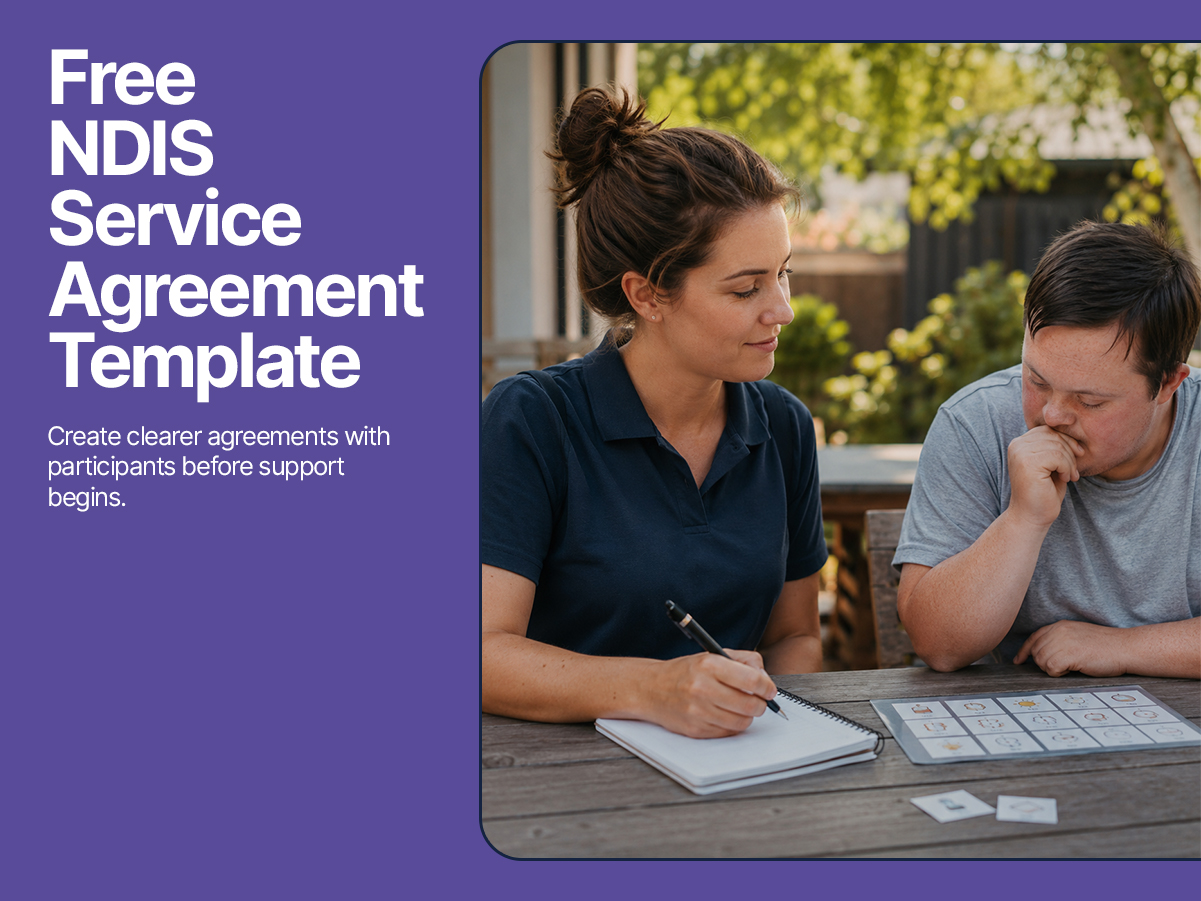
Download the Free NDIS Service Agreement Template
A service agreement should make the support relationship clearer from the beginning.
It should help participants understand what they can expect and help providers deliver supports consistently, professionally, and transparently.
Use this free NDIS service agreement template as a starting point for your organisation.
Before using it, make sure you review it carefully and adapt it to your services, pricing, policies, participant needs, and professional obligations.
If you are unsure about legal, tax, or compliance requirements, seek professional advice.
Download the free template here:
https://form.jotform.com/220660682454860
Sources and References
-
NDIS. How to make a service agreement. https://www.ndis.gov.au/participants/working-providers/arranging-supports/how-make-service-agreement
-
NDIS. What is a service agreement. https://www.ndis.gov.au/participants/working-providers/arranging-supports/what-service-agreement
-
NDIS. NDIS Pricing Arrangements and Price Limits. https://www.ndis.gov.au/providers/pricing-arrangements
-
NDIS Quality and Safeguards Commission. NDIS Practice Standards. https://www.ndiscommission.gov.au/providers/provider-registration/ndis-practice-standards
-
Australian Competition and Consumer Commission. Consumer rights. https://www.accc.gov.au/consumers